
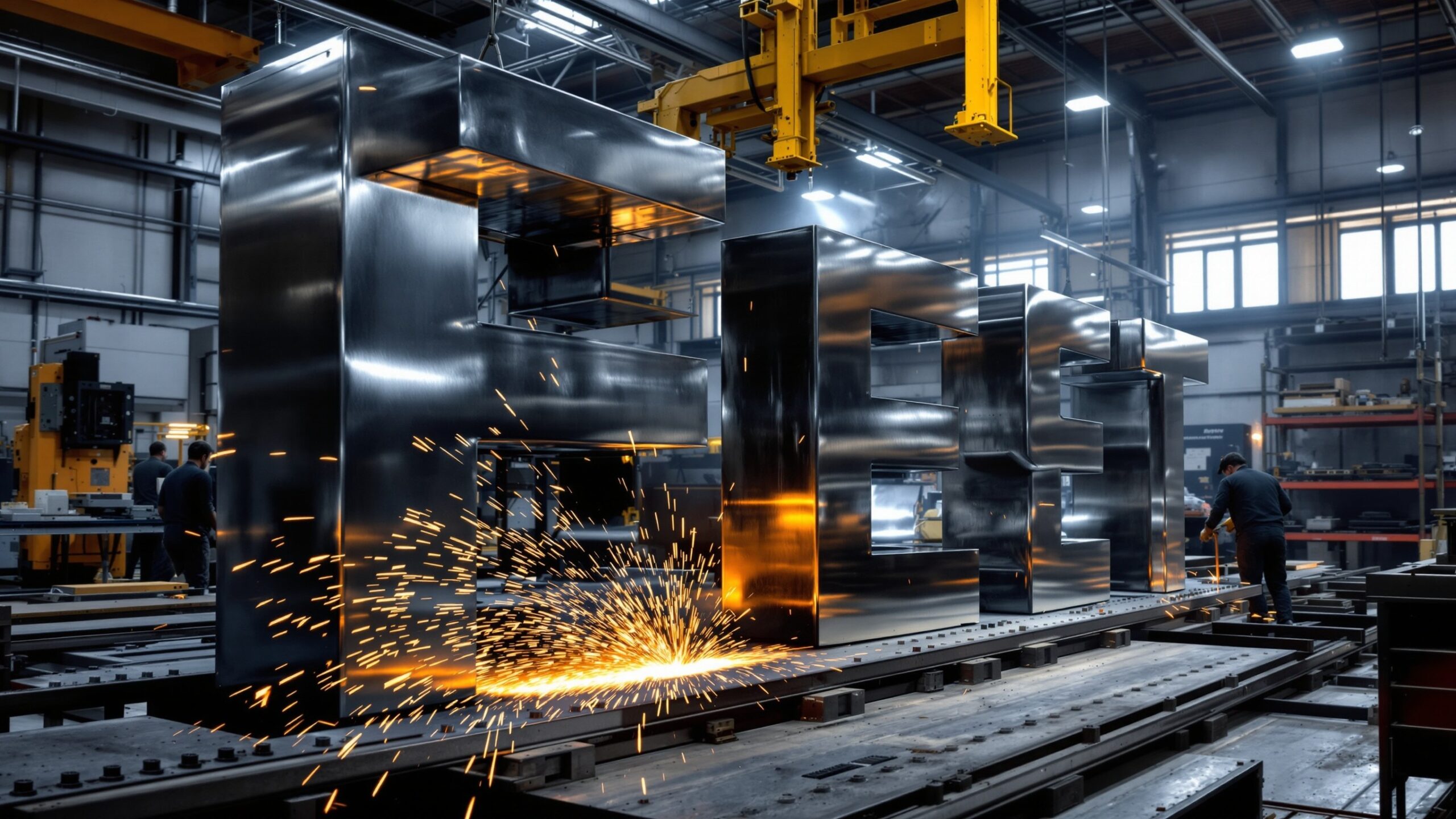
Behind the Fabrication pulls back the curtain on how bold letter installations are actually made, revealing the craftsmanship, engineering, and creative problem-solving that transform concepts into striking physical forms. This subcategory explores the full fabrication journey behind dimensional letters, sculptural typography, and large-scale letter installations—from early sketches and material selection to cutting, welding, finishing, and final assembly. Readers will discover how metals, plastics, wood, foam, and emerging composites are shaped, reinforced, and refined to achieve both visual impact and structural integrity. Behind the Fabrication also examines the tools, techniques, and fabrication environments that power modern letter making, including CNC routing, laser cutting, hand finishing, and hybrid digital-analog workflows. Along the way, it highlights the decisions fabricators make to balance durability, scale, lighting integration, and installation constraints. Designed for designers, builders, and curious creatives alike, this section offers an inside look at the often unseen processes that bring letter installations to life—where precision meets artistry, and typography becomes architecture.
A: Clean vector files such as AI, EPS, or SVG.
A: Most can, but many require modification.
A: Aluminum and stainless steel perform best.
A: Studs, standoffs, or raceways depending on surface.
A: Yes, due to structural and alignment challenges.
A: For metal returns and complex joints.
A: Typically 2–6 weeks depending on complexity.
A: Most materials allow refinishing or replacement.
A: Size, material, depth, and finish.
A: Yes for high-visibility or custom projects.